Does Unsupervised FSD Actually Make You More Productive? Maybe Not.
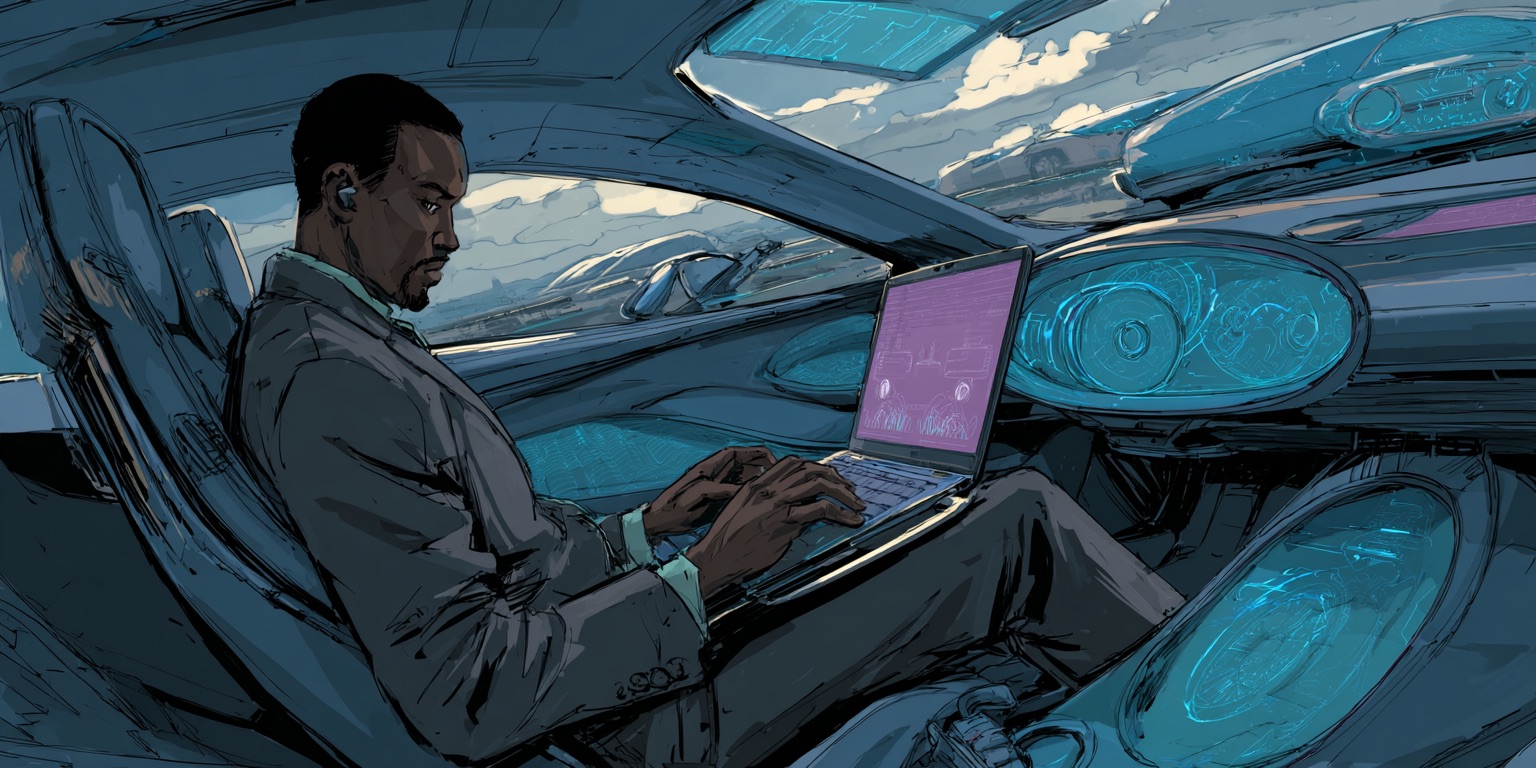
Does Unsupervised FSD Actually Make You More Productive? Maybe Not.
I've long said that the moment Tesla releases unsupervised Full Self-Driving, I'll convert. I don't care about the drama around Elon Musk or the company — I love the vehicles, even though I don't own one yet. My manual Honda Civic has served me well since 2013, and it'll keep going. But unsupervised FSD? That would change everything.
Or so I thought.
The Productivity Promise
Here's why I assumed it mattered: I spend two hours a day commuting. An hour between daycare and work in the morning. Another hour getting back in the evening. That's a significant chunk of time behind the wheel every week, and I've been trying to make the most of it — using the drive to collect my thoughts, process my day, and work through problems in the background.
But I started wondering: if I could pull out my laptop and actually work during those two hours, would I be more productive? Would reclaiming that time for real output change things meaningfully?
The Hidden Cost Nobody Talks About
Here's the thing — there's a trap buried in that question.
Sure, I could pull out my laptop. But would I actually get good work done, or would I end up doing what most people do when given unstructured screen time? Scrolling. Half-watching something. Feeling busy without actually moving anything forward.
And beyond that, I started to realize my commute might be doing something for me that I can't easily replace. I can't just sit and think at the office — there's always something pulling at my attention. When I'm home with my kids, disappearing into my own head for an hour isn't an option. After bedtime, there are chores, there's catch-up work. That daily drive is, weirdly, the most reliable thinking time I have.
I could listen to podcasts. I could listen to music. I do, sometimes. But those can happen while I'm multitasking at work too. The thing I can't replicate elsewhere is the forced stillness. The absence of screens. The fact that I have no choice but to sit with my own thoughts for a while.
The Real Insight: Constraints as a Feature
This is where it clicked for me.
The constraint of having to actively drive — of not being able to look at a screen — is actually making a valuable choice on my behalf. In a world drowning in options, where every app and notification is designed to steal your attention, having a protected pocket of thinking time is increasingly rare.
Just because unsupervised FSD would let me work during those two hours doesn't mean I should. And honestly, left to my own devices with a laptop and two hours of free time in a moving car? I'm not sure I'd choose to think. I might just choose to scroll.
The driving constraint removes that choice. And sometimes, that's exactly what you need.
So Would I Still Get FSD?
Probably. It's too enticing to turn down, and I'm not going to pretend I'm above it. But this whole thought experiment has made me realize I'd need to be intentional about protecting that thinking time even after the constraint disappears.
The technology doesn't take anything away from me — it just removes the guardrail. What I do with that freedom is still up to me.
And knowing that, I think I'd choose to think.